(Lymphoma) Ezharmia Launched for Sale in Japan
Medical Supporter — إشعار معلوماتي
هذه المقالة ملخص لمعلومات طبية دولية وليست نصيحة طبية، ولا يمكن أن تحل محل تشخيص طبيبك المعالج أو خطة العلاج. المعلومات المعروضة مجمّعة من منشورات عامة وبيانات رسمية لكبرى المؤسسات الطبية اليابانية؛ وتختلف ملاءمة ونتائج أي علاج من مريض لآخر ويجب أن يقيّمها طبيب مؤهل لكل حالة على حدة.
- December 23, 2022
- Read time: 1 minute
On December 20, 2022, Daiichi Sankyo Co., Ltd. announced the launch of Ezharmia, a treatment drug for relapsed or refractory adult T-cell leukemia-lymphoma (ATL), available in 50 mg and 100 mg tablet formulations.
Adult T-cell leukemia-lymphoma is one of the common hematological malignancies in Japan, with approximately 1,000 new cases detected annually. It is known that ATL is caused by HTLV-1 infection, but no effective method or treatment to prevent its onset has been found.
This launch was based on results from a Phase II clinical trial conducted in Japan, enrolling relapsed or refractory ATL patients (N=25) treated with Ezharmia to evaluate safety and efficacy. The primary endpoint response rate was 48%, comprising 5 patients with complete remission, 37 patients with partial remission, and 10 patients with stable disease.
Additionally, based on the trial results, Ezalmia received designation as an orphan drug by the Ministry of Health, Labour and Welfare in November 2021 and received domestic manufacturing and marketing approval in Japan in September 2022.
Source: https://www.daiichisankyo.co.jp/files/news/pressrelease/pdf/202212/20221220_J.pdf
- Clinical Trial Medications
Medical Supporter was formerly certified as an international medical visa guarantor by Japan's Ministry of Foreign Affairs and the Ministry of Economy, Trade and Industry (B-066).
هل تفكر في تلقّي العلاج في اليابان؟ هل تحتاج إلى معلومات ومساعدة؟
نساعدك في تنظيم المعلومات اللازمة للسفر الطبي إلى اليابان، والتواصل مع المؤسسات الطبية اليابانية، وترتيب استشارة رأي ثانٍ.الاستشارة الأولى مجانية؛ سيساعدك المستشار على توضيح الخطوات التالية.
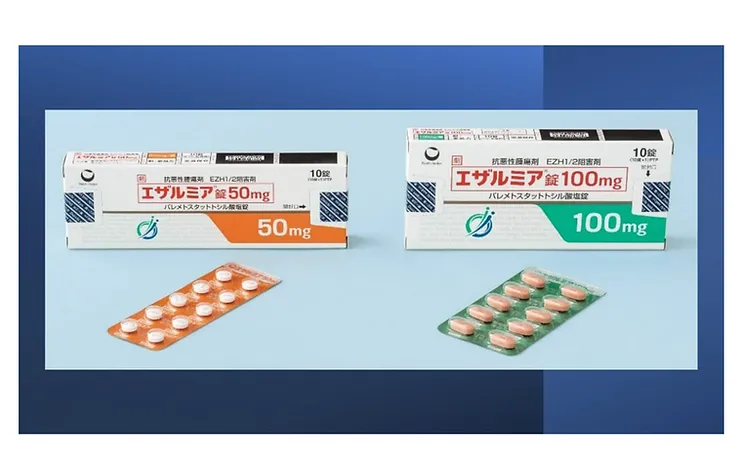 Figure 1
 Figure 2
 Figure 3
 Figure 4