
(Pancreatic Cancer) Is Sotorasib Monotherapy Effective?
Medical Supporter — إشعار معلوماتي
هذه المقالة ملخص لمعلومات طبية دولية وليست نصيحة طبية، ولا يمكن أن تحل محل تشخيص طبيبك المعالج أو خطة العلاج. المعلومات المعروضة مجمّعة من منشورات عامة وبيانات رسمية لكبرى المؤسسات الطبية اليابانية؛ وتختلف ملاءمة ونتائج أي علاج من مريض لآخر ويجب أن يقيّمها طبيب مؤهل لكل حالة على حدة.
On December 21, 2022, John H. Strickler et al. from Duke Cancer Center published in the medical journal The New England Journal of Medicine the "Efficacy and Safety Results of Sotorasib Monotherapy in Pretreated Advanced Pancreatic Cancer Patients with KRAS G12C Gene Mutations, from the CodeBreaK 100 Phase 1/2 Clinical Trial."
The CodeBreaK 100 trial was a single-arm Phase 2 clinical trial that treated pretreated advanced pancreatic cancer patients with KRAS G12C mutations (N=38) with Sotorasib 960 mg once daily. The primary endpoint was the objective response rate.
The trial results showed a primary endpoint objective response rate of 21%, progression-free survival of 4.0 months, and median overall survival of 6.9 months.
In terms of safety, the adverse event incidence rate was 42% (N=16), with Grade 3 or higher adverse events occurring in 16% of patients. No patient deaths due to adverse events were confirmed.
Based on the CodeBreaK 100 trial results, John H. Strickler et al. stated: "In pretreated advanced pancreatic cancer patients with KRAS G12C gene mutations, Sotorasib monotherapy demonstrated good antitumor activity with a favorable safety profile."
Source: https://oncolo.jp/news/230120y01
Medical Supporter was formerly certified as an international medical visa guarantor by Japan's Ministry of Foreign Affairs and the Ministry of Economy, Trade and Industry (B-066).
هل تفكر في تلقّي العلاج في اليابان؟ هل تحتاج إلى معلومات ومساعدة؟
نساعدك في تنظيم المعلومات اللازمة للسفر الطبي إلى اليابان، والتواصل مع المؤسسات الطبية اليابانية، وترتيب استشارة رأي ثانٍ.الاستشارة الأولى مجانية؛ سيساعدك المستشار على توضيح الخطوات التالية.
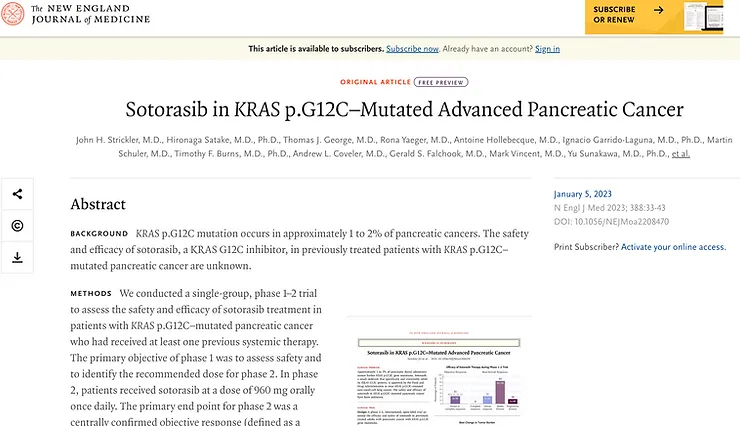 Figure 1
 Figure 2
 Figure 3
 Figure 4