(Oral Cancer) Tumor Successfully Reduced in Inoperable Patient After Photoimmunotherapy
Medical Supporter — إشعار معلوماتي
هذه المقالة ملخص لمعلومات طبية دولية وليست نصيحة طبية، ولا يمكن أن تحل محل تشخيص طبيبك المعالج أو خطة العلاج. المعلومات المعروضة مجمّعة من منشورات عامة وبيانات رسمية لكبرى المؤسسات الطبية اليابانية؛ وتختلف ملاءمة ونتائج أي علاج من مريض لآخر ويجب أن يقيّمها طبيب مؤهل لكل حالة على حدة.
On April 23, 2020, Kobe University Hospital in Hyogo Prefecture accepted the prefecture's first patient to receive photoimmunotherapy (PIT) covered by national health insurance for oral cancer. This patient had experienced a sixth recurrence and had originally planned to give up treatment because surgery was very difficult. However, approximately 70% of the tumor became necrotic three weeks after receiving photoimmunotherapy, and the attending physician stated that the tumor had shrunk and treatment would continue.
Photoimmunotherapy was developed by Chief Researcher Hisataka Kobayashi, a Japanese scientist at the National Institutes of Health (NIH) in the United States. It uses chemical reactions generated by substances that absorb near-infrared light to attack cancer cells. In 2012, then-US President Obama mentioned photoimmunotherapy in the State of the Union Address, and in September 2020, Japan also approved the therapeutic drug for photoimmunotherapy.
According to Chief Researcher Hisataka Kobayashi, the antibody conjugated with a special substance is injected the day before treatment. After one day, the drug accumulates in the cancer cells, and then near-infrared light, which does not affect the human body, is irradiated. The cancer cells are destroyed through a chemical reaction, and the destroyed cancer cells release special substances that activate immune cells in the body to prevent metastasis and recurrence.
Associate Professor Hirotaka Shinomiya of Kobe University Hospital stated that the patient had received surgery and radiation therapy for cancer of the throat, gums, and cheeks since 2012. This time, a tumor measuring 45mm in length, 32mm in width, and 25mm in thickness had formed under the skin of the right cheek. Although no metastasis was found, it was determined to be Stage III cancer — the patient's second most serious condition. Given the patient's treatment history, further radiation therapy was not possible, and the likelihood of a cure through chemotherapy was low. Surgery would require complete removal of the right cheek and skin grafting from the abdomen, with an estimated surgical time of 10 hours. Even with postoperative chemotherapy and other treatments, the 5-year survival rate would be only about 50%.
For the April 23 irradiation, five hollow needles were each inserted into five optical fibers, then inserted into the tumor from the outside, with simultaneous irradiation on the tumor's exterior surface. The irradiation time was approximately 20 minutes, and the total treatment time was approximately 1 hour. After treatment, the patient was placed in a dimly lit room to recover, reducing the possibility of side effects, and was discharged one week later without assistance.
Approximately three weeks after irradiation, Associate Professor Hirotaka Shinomiya analyzed the CT scan results from May 13 and confirmed that 70% of the tumor had become necrotic. Although it is not yet possible to evaluate the therapeutic effect, the goal is a complete cure, and the team hopes to proceed with a second irradiation as soon as possible.
Source: https://www.kobe-np.co.jp/news/sougou/202105/0014333731.shtml
Medical Supporter was formerly certified as an international medical visa guarantor by Japan's Ministry of Foreign Affairs and the Ministry of Economy, Trade and Industry (B-066).
هل تفكر في تلقّي العلاج في اليابان؟ هل تحتاج إلى معلومات ومساعدة؟
نساعدك في تنظيم المعلومات اللازمة للسفر الطبي إلى اليابان، والتواصل مع المؤسسات الطبية اليابانية، وترتيب استشارة رأي ثانٍ.الاستشارة الأولى مجانية؛ سيساعدك المستشار على توضيح الخطوات التالية.
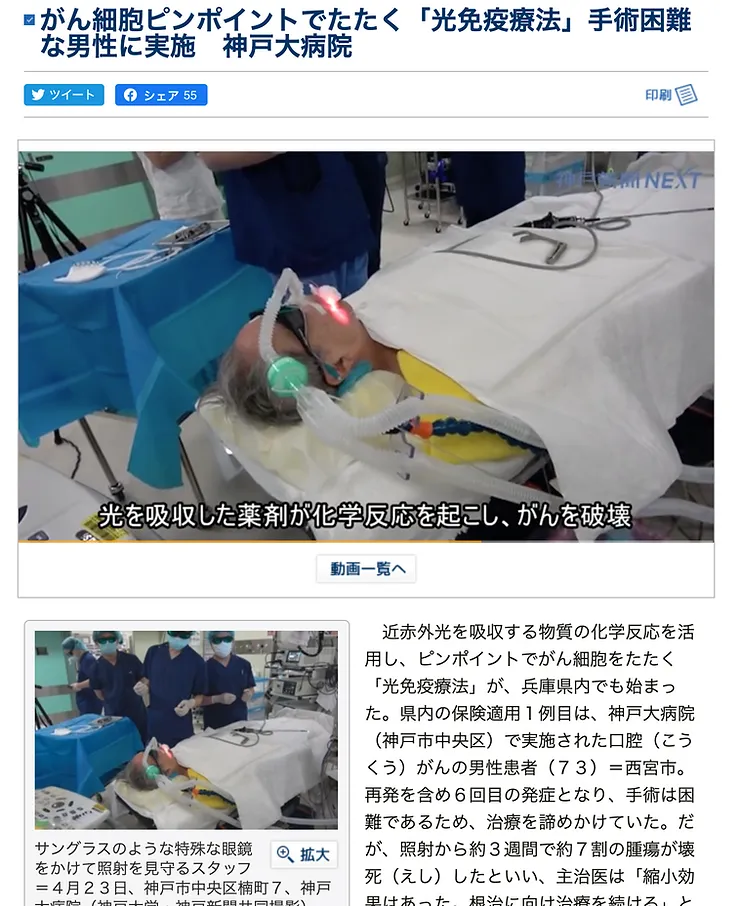 Figure 1
 Figure 2
 Figure 3
 Figure 4