
Capecitabine as Adjuvant Therapy for Biliary Tract Cancer: BILCAP Trial
Medical Supporter — ประกาศข้อมูล
บทความนี้เป็นการสรุปข้อมูลทางการแพทย์ระหว่างประเทศ ไม่ใช่คำแนะนำทางการแพทย์ และไม่สามารถใช้แทนการวินิจฉัยหรือแผนการรักษาของแพทย์ผู้ดูแลของคุณได้ ข้อมูลที่นำเสนอรวบรวมจากเอกสารสาธารณะและคำชี้แจงอย่างเป็นทางการของสถาบันการแพทย์ชั้นนำของญี่ปุ่น ความเหมาะสมและผลของการรักษาแต่ละแบบแตกต่างกันไปในผู้ป่วยแต่ละราย และต้องได้รับการประเมินเป็นรายบุคคลโดยแพทย์ที่มีคุณสมบัติ
On March 22, 2022, John Bridgewater and colleagues from the UCL Cancer Institute published the long-term follow-up results of the BILCAP Phase 3 clinical trial in the Journal of Clinical Oncology. The study investigated the efficacy of capecitabine as an adjuvant therapy for patients with biliary tract cancer (BTC) who had undergone radical surgical resection.
Study Design: BILCAP Phase 3 Trial
BILCAP was a multicenter, randomized Phase 3 trial involving 447 patients who had undergone complete resection for BTC. Participants were randomized 1:1 into two groups:
- Capecitabine Group (N=223): Capecitabine 1,250 mg/m² twice daily on days 1–14 of a 21-day cycle, for a total of 8 cycles.
- Observation Group (N=224): Monitoring without active adjuvant therapy.
The primary endpoint was overall survival (OS).
Long-term Follow-up Results (Median 106 Months)
- Median Overall Survival: 49.6 months for the capecitabine group vs. 36.1 months for the observation group.
- Risk Reduction: The capecitabine group showed a 16% reduction in the risk of death (Hazard Ratio [HR] = 0.84).
- Adjusted Analysis: After adjusting for factors such as nodal status, tumor grade, and sex, the risk of death was reduced by 26% (HR = 0.74).
Conclusion
The authors concluded that adjuvant capecitabine significantly improves overall survival in patients with BTC following surgical resection. Based on these findings, capecitabine is established as a standard of care for adjuvant therapy in this patient population.
Source: Journal of Clinical Oncology - BILCAP Trial Results
#BiliaryTractCancer #Cholangiocarcinoma #Capecitabine #BILCAPTrial #CancerResearch #AdjuvantTherapy
กำลังพิจารณาเดินทางไปรักษาที่ญี่ปุ่น? ต้องการข้อมูลและความช่วยเหลือไหม?
เราช่วยคุณจัดเตรียมข้อมูลที่จำเป็นสำหรับการเดินทางไปรักษาที่ญี่ปุ่น ติดต่อสถาบันการแพทย์ญี่ปุ่น และจัดการปรึกษาความเห็นที่สองการปรึกษาครั้งแรกฟรี ที่ปรึกษาจะช่วยให้คุณเห็นขั้นตอนต่อไปชัดเจน
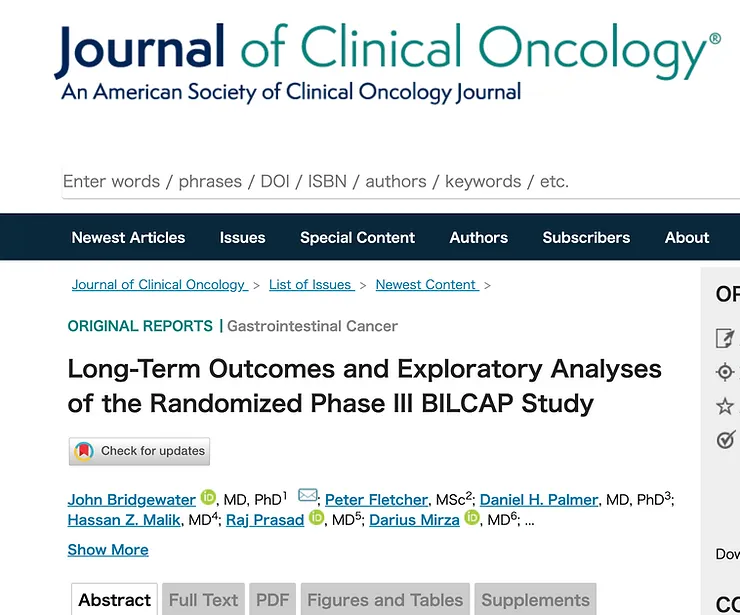 Figure 1
 Figure 2
 Figure 3
 Figure 4